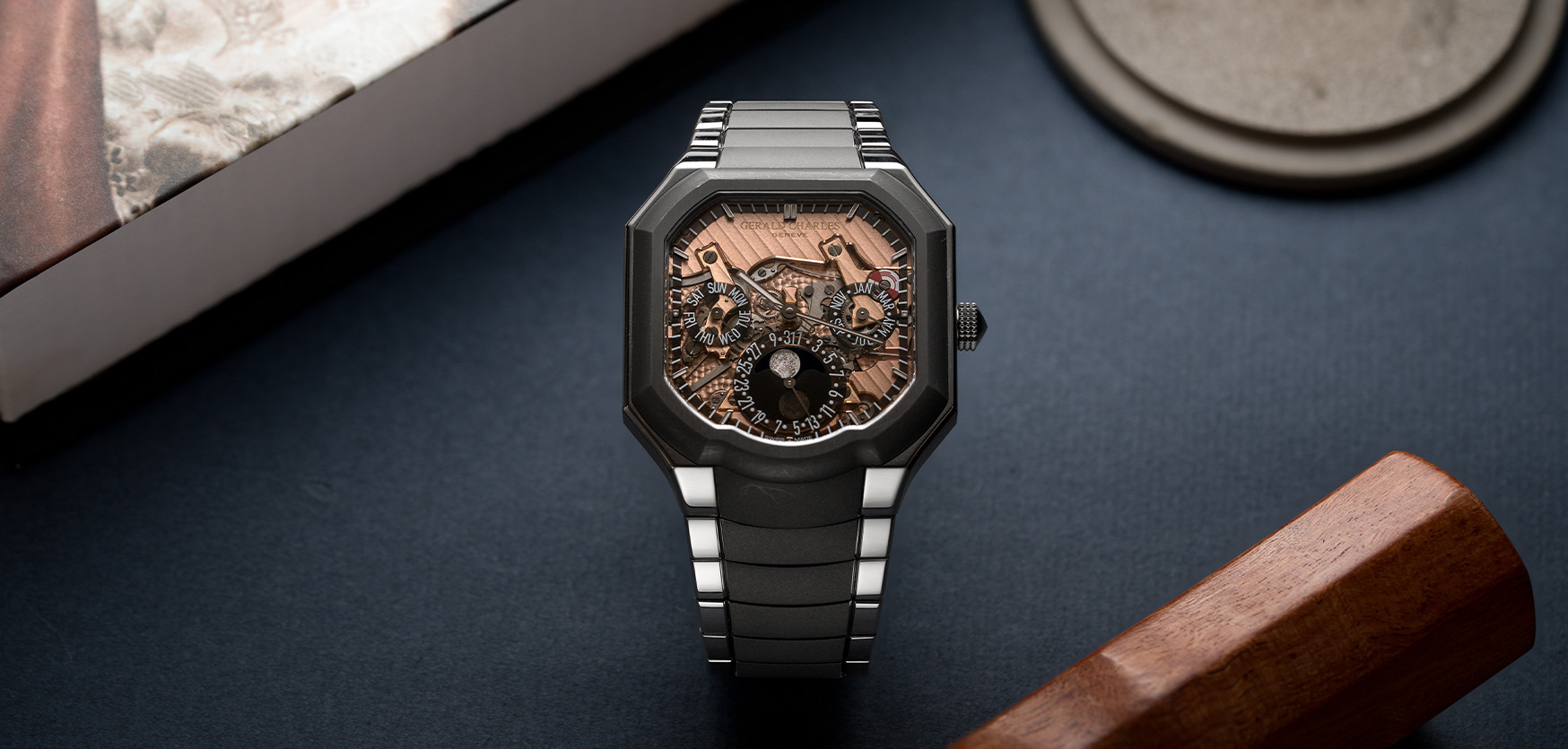
Introducing Breguet Refreshes the Tradition Collection with a Modern Touch
Welcome to the hub of the horoloy
The First Two-Hand Watch to Earn Master Chronometer Certification Through Dual Metric Technology

Resolving a fundamental mechanical limitation in modern chronometry certification, Omega introduces the first two-hand watches to achieve Master Chronometer status. Until now, testing protocols established by the Federal Institute of Metrology (METAS) strictly required a running seconds hand to visually track and measure deviation throughout the test period. The newly established Laboratoire de Précision, acting as an independent certification body accredited by the Swiss Accreditation Service, developed Dual Metric Technology to bypass this optical requirement entirely.
 Instead of photographing a seconds hand once per day, the testing unit relies on a self-contained acoustic system that continuously captures the auditory signature of the escapement’s ticks and tacks. This acoustic data is recorded alongside simultaneous measurements of temperature, physical position, ambient magnetic fields, and atmospheric pressure across a full 25-day testing cycle.
 Two years after announcing the Laboratoire de Précision, Omega now introduces the Constellation Observatory Collection, an entirely new line presented in nine editions and powered by a new pair of calibres. Using an acoustic testing method combined with optical hand-tracking, developed by the Laboratoire de Précision and certified by METAS, the collection’s movements and completed watches undergo both Chronometer and Master Chronometer testing without the need for a seconds hand. For the first time in watchmaking history, a two-hand watch displaying only hours and minutes has achieved Master Chronometer certification.
 |  |  |
Since 1952, the Constellation has represented Omega’s commitment to certified precision. The Constellation Observatory Collection marks the next chapter in this legacy, introducing two new movements across nine references.
 The Laboratoire de Précision has developed a wireless, self-contained testing unit that consolidates all Chronometer and Master Chronometer certification processes into a single device. Powered by Dual Metric Technology, the unit continuously captures the sound of each tick and tack while simultaneously recording environmental parameters such as temperature, position, magnetic fields, and atmospheric pressure throughout the full 25 days of testing.
 Traditional testing methods relied on photographing the position of the seconds hand, effectively generating one result per day. By contrast, Dual Metric Technology produces continuous data from the very first second. The acoustic signature can isolate frequency irregularities, temperature and pressure sensitivities, positional variation, and amplitude fluctuations. This enables watchmakers to identify not only that a variation exists, but precisely where and when it occurs.
 The Omega Constellation Observatory Collection reinterprets some of the brand’s most defining aesthetic codes. Its design language can be traced back to the 1948 Centenary, which laid the foundation for the Constellation line. The dodecagonal pie-pan dial followed shortly after the launch of the first Constellation, along with the Constellation Star at 6 o’clock and the Observatory medallion on the caseback. The guilloché finish seen on the facets of the pie-pan recalls a detail first established on the early Grand Luxe models. Faceted kite-form indexes and dauphine hands draw directly from earlier Constellation references, while the distinctive dog-leg lugs reference Omega models of the same era. Even the nine-row brick pattern on the 18K Moonshine™ Gold mesh bracelet takes inspiration from vintage brick bracelets worn during the Constellation’s formative years.
 |  |
The case architecture of the Constellation Observatory Collection measures 39.4 mm in diameter, with a lug-to-lug span of 47.20 mm and a thickness of 12.23 mm, while the platinum variant increases marginally to 12.32 mm. The 19 mm lug width accommodates the return of the faceted dog-leg lugs, a structural design element that directly references Omega’s mid-century case construction prior to the integrated bracelet era. The collection also features a sharply faceted bezel that steps down toward a domed, bevelled sapphire crystal.
 |  |
The steel variants are produced in O-MEGASTEEL, an alloy manufactured using a Pressure Electro Slag Remelting process that removes nickel while increasing nitrogen and manganese content. This metallurgical composition yields a Vickers hardness rating 40 to 50 percent higher than conventional 316L stainless steel, while also offering a brighter white appearance and non-ferromagnetic properties that support the movement’s overall magnetic resistance.
 Alongside the steel models, Omega introduces four proprietary precious metal executions. Sedna™ Gold uses a carefully calibrated blend of copper and palladium to create a red hue that resists the oxidation and colour fading often associated with conventional 18K rose gold. Moonshine™ Gold offers a paler, cooler yellow tone than traditional 3N yellow gold, while Canopus Gold™ serves as a brilliant white gold alloy that requires no rhodium plating to maintain its lustre.

The dial design is built around the dodecagonal pie-pan architecture, referencing both the original 1952 Constellation and the earlier 1948 Centenary. Dial execution varies according to case material. The standard O-MEGASTEEL models feature a brass base with a sun-brushed centre and opaline facets stamped with eight embossed grooves. The black dial variant within the steel range is crafted in polished black ceramic, a material choice that required highly specialised machining to achieve the sharp, intersecting angles of the twelve-sided pie-pan profile without compromising structural integrity.
 The precious metal models replace the stamped brass base with solid 18K gold dials matched to their respective case alloys and finished with hand-guilloché grooves on the facets rather than embossed lines. Across all references, the dial furniture consists of applied kite-form indexes and dauphine hands, fully diamond-polished to create crisp light transitions across their central ridges. The applied Omega logo and Constellation star at 6 o’clock are executed in 18K white gold on the steel models, or in matching proprietary gold alloys on the precious metal versions.
 |  |
Closer inspection reveals vertically brushed case flanks transitioning sharply into polished bevels along the dog-leg lugs, creating a high-contrast finish that enhances the sculptural geometry of the case. The applied Constellation star stands proud of the dial surface, adding a subtle sense of depth against the domed pie-pan centre.
The collection includes four expressions in 18K gold, each developed to deliver a fully coherent precious-metal identity. Full 18K Sedna™ Gold and Moonshine™ Gold references unite case, hand-guilloché dial, and movement, and are available on either leather straps or bracelet. The 18K Canopus Gold™ model presents a cleaner monochromatic execution, while the platinum-gold edition completes Omega’s precious-metal offering by bringing all four of the brand’s proprietary precious metal alloys together within a single collection for the first time.
 There are also four expressions in Omega’s exclusive steel alloy, selected for its hardness and mechanical performance. Among them is the black ceramic pie-pan dial, a notable technical achievement in dial production that required extensive development to realise the sharp geometry of the dodecagonal form in ceramic. Three additional references feature coloured dials with stamped groove facets.
 Powering the new Omega Constellation Observatory are two new calibres based on the familiar 89xx architecture, each fitted with a skeletonised rotor bearing an applied Constellation Observatory medallion. They beat at 25,200 vibrations per hour (3.5 Hz) and feature a single barrel delivering 60 hours of power reserve. Both movements incorporate a Co-Axial escapement, a free-sprung balance, and a silicon balance spring.
 The Calibre 8915 Grand Luxe powers the 950 platinum-gold edition. Here, the Observatory medallion is rendered in 18K white gold and laser-ablated, with a dark blue sky in aventurine enamel highlighted by eight stars, while the Observatory dome is filled with translucent white opal enamel.
The Calibre 8915 Luxe is reserved for the 18K gold collection and features a dedicated balance bridge, marking the first use of an 18K Moonshine™ Gold rotor and balance bridge in Omega’s history. Its medallion is executed in 18K gold with laser-ablated detailing.
The Calibre 8914 Standard powers the O-MEGASTEEL Constellation models and mirrors the Calibre 8915 Luxe with a fully rhodium-plated finish.
 The standard configuration for the Constellation Observatory Collection pairs the 39.4 mm case with a traditional leather strap secured by a pin buckle. These straps feature alligator leather uppers with grained calf leather undersides, with the exception of the platinum-gold model, which uses a non-grained alligator underside and incorporates distinct golden scalelines into its dark grey upper surface. Strap colours are coordinated with the dial executions and include grey, blue, black glossy, yellowish green, and dark burgundy options.
A full metal bracelet is available exclusively for the 18K Moonshine™ Gold reference, deliberately avoiding contemporary integrated design codes in favour of a historically inspired nine-row brick construction. Crafted entirely from solid 18K Moonshine™ Gold, the bracelet features polished mesh strands arranged in a dense, silk-like pattern that drapes fluidly across the wrist.
Prices start from EUR 10,700 in steel (approx. AED 45,500), EUR 12,000 in steel with black ceramic dial (approx. AED 51,000), EUR 37,300 in Sedna™ and Moonshine™ Gold (approx. AED 158,600), EUR 58,200 in Moonshine™ Gold with mesh bracelet (approx. AED 247,500), EUR 43,400 in Canopus Gold™ (approx. AED 184,500), and EUR 56,900 in gold/platinum (approx. AED 241,900).
For more information visit Omega official website.
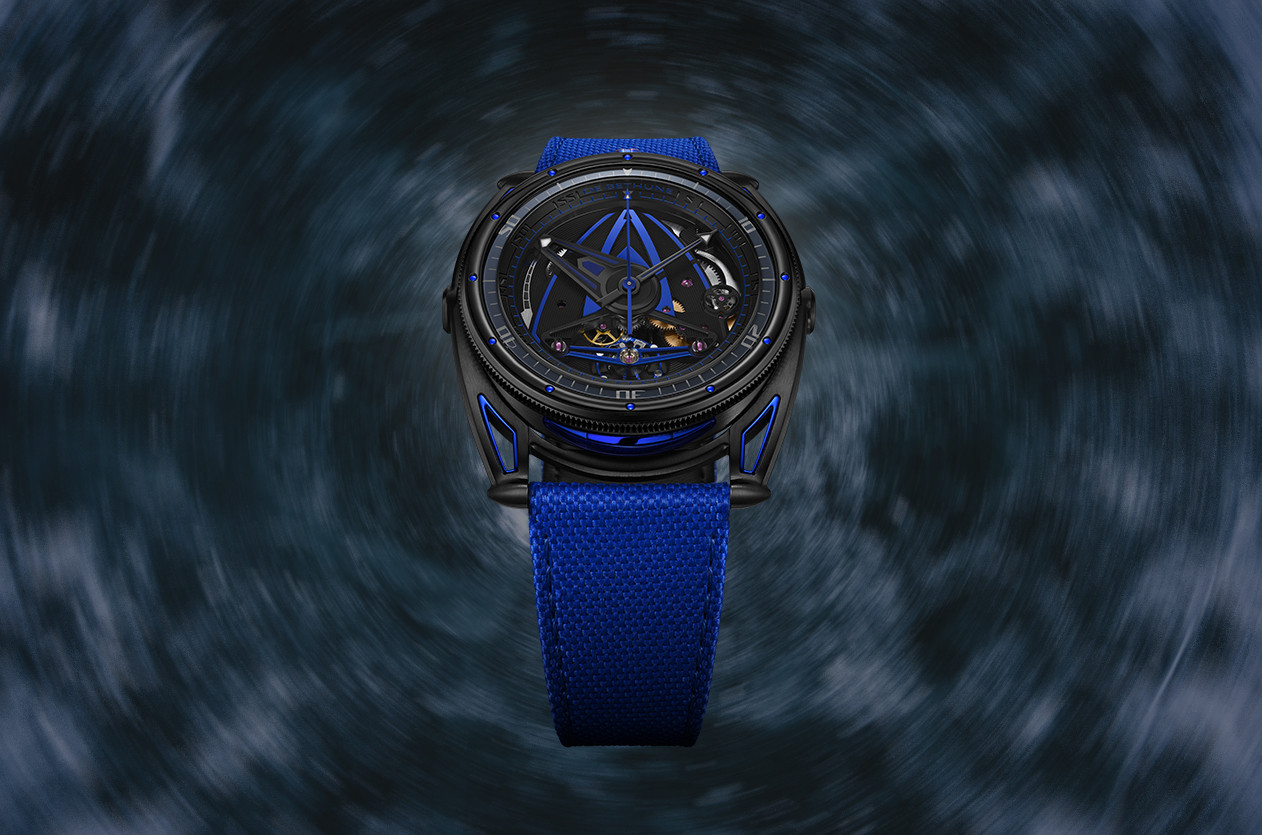
Introducing DB28GS Swordfish: The Luxury Dive Watch from De Bethune
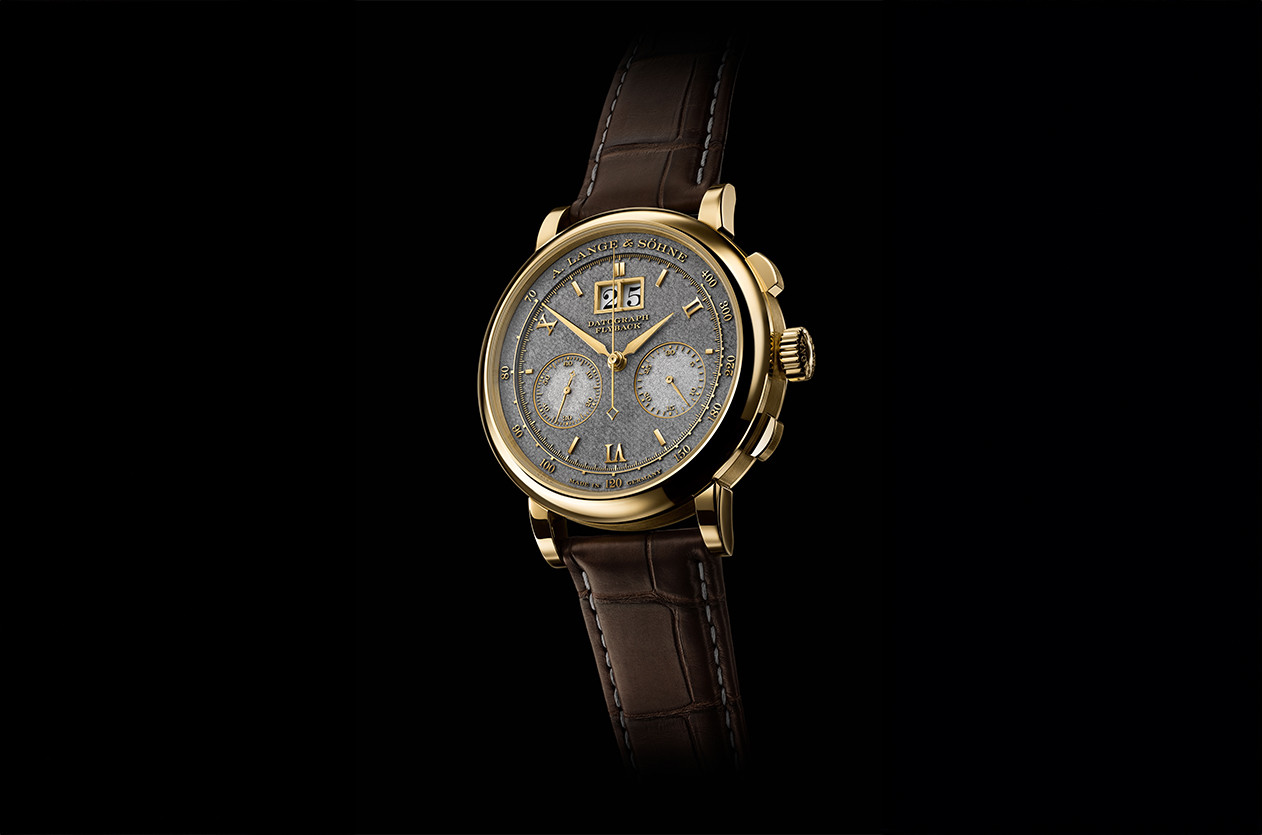
Introducing A. Lange & Söhne Continues Celebrating the 25th Anniversary of the Datograph
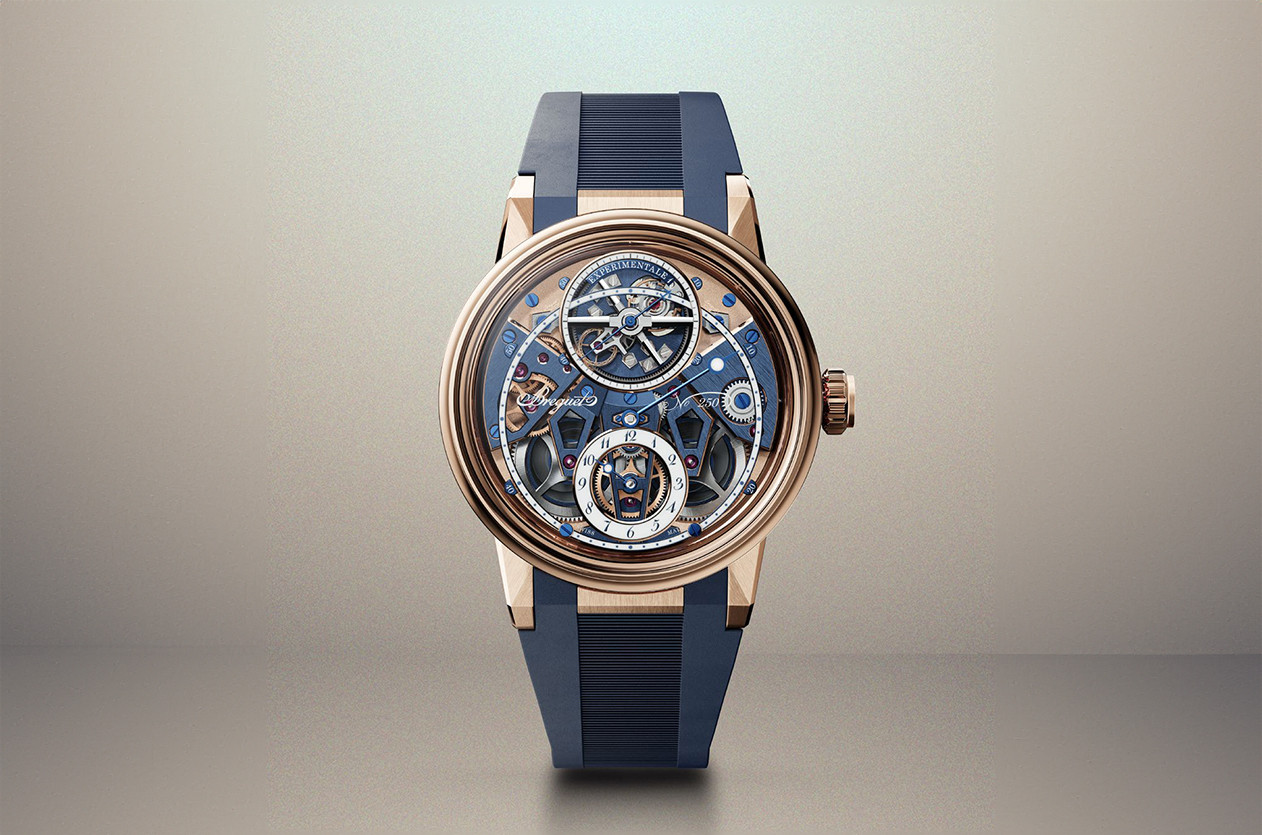
Introducing Breguet Unveils Its Final 250th-Anniversary Timepiece: Expérimentale 1
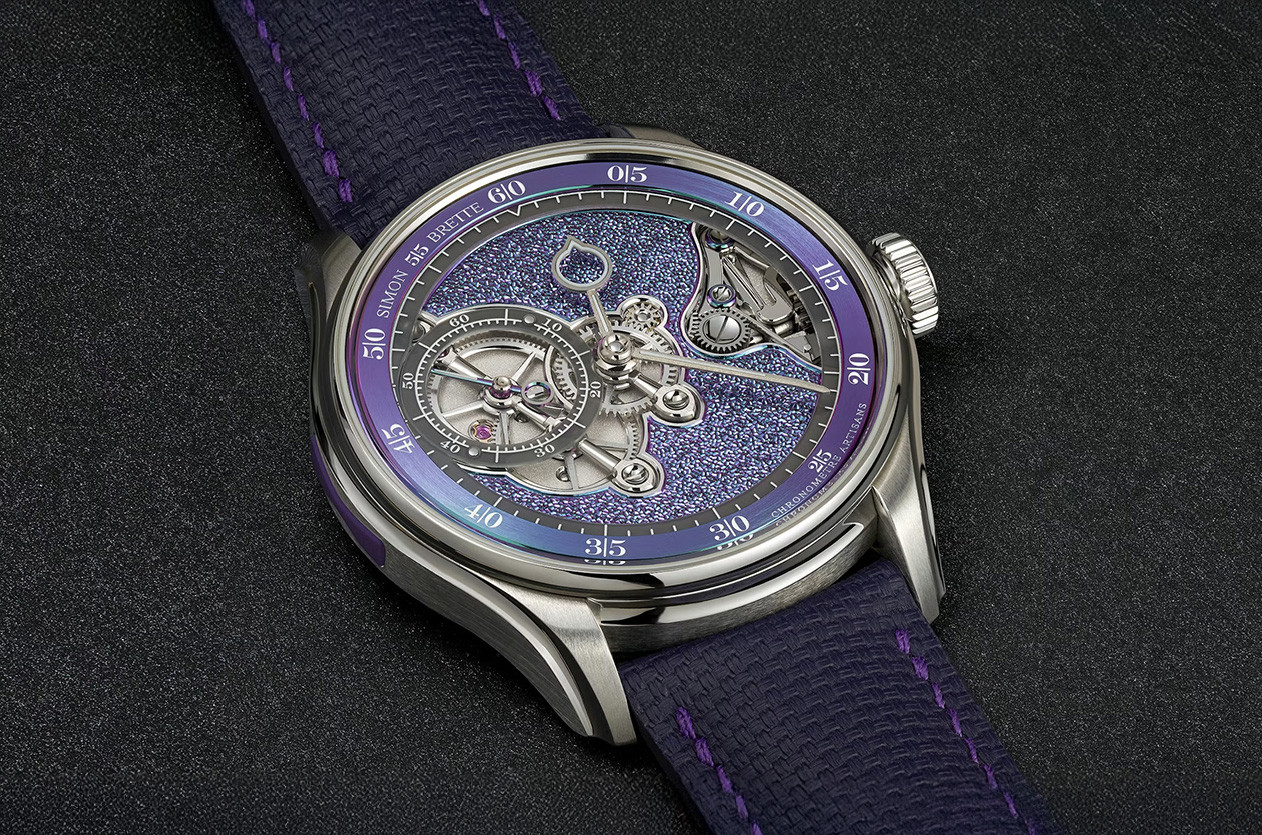
Introducing Simon Brette Unveils the Chronomètre Artisans in Stainless Steel
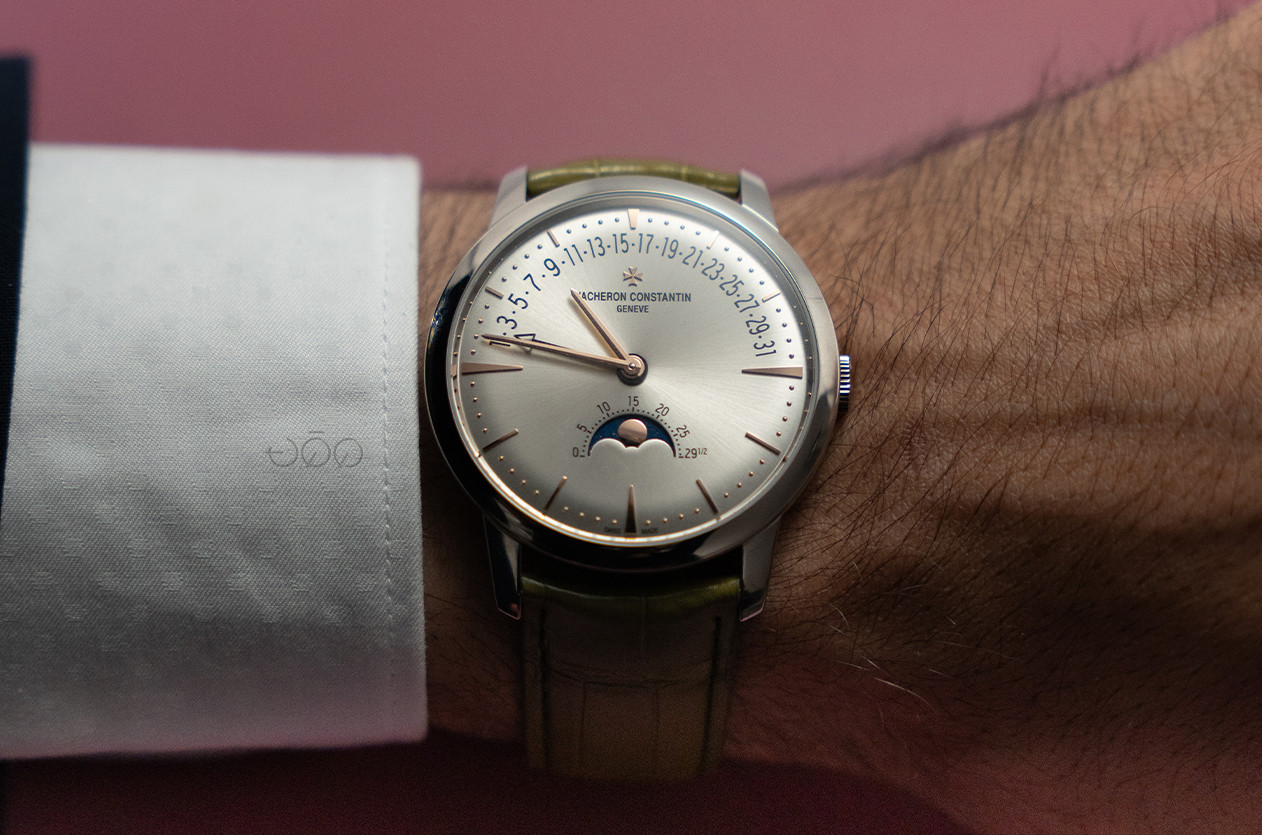
Hands on The New Vacheron Constantin Patrimony Collection
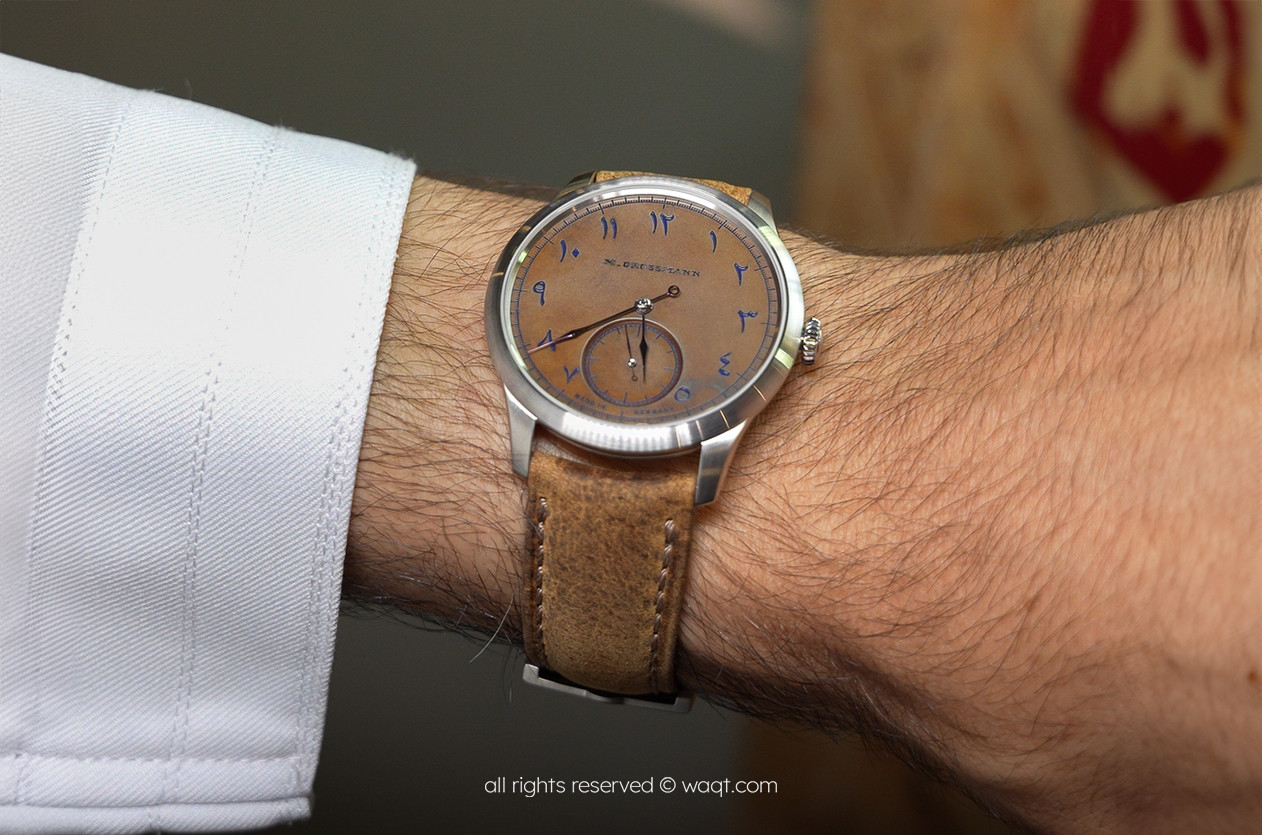
Introducing Moritz Grossmann Presents the TEFNUT Seddiqi 75 Anniversary Edition
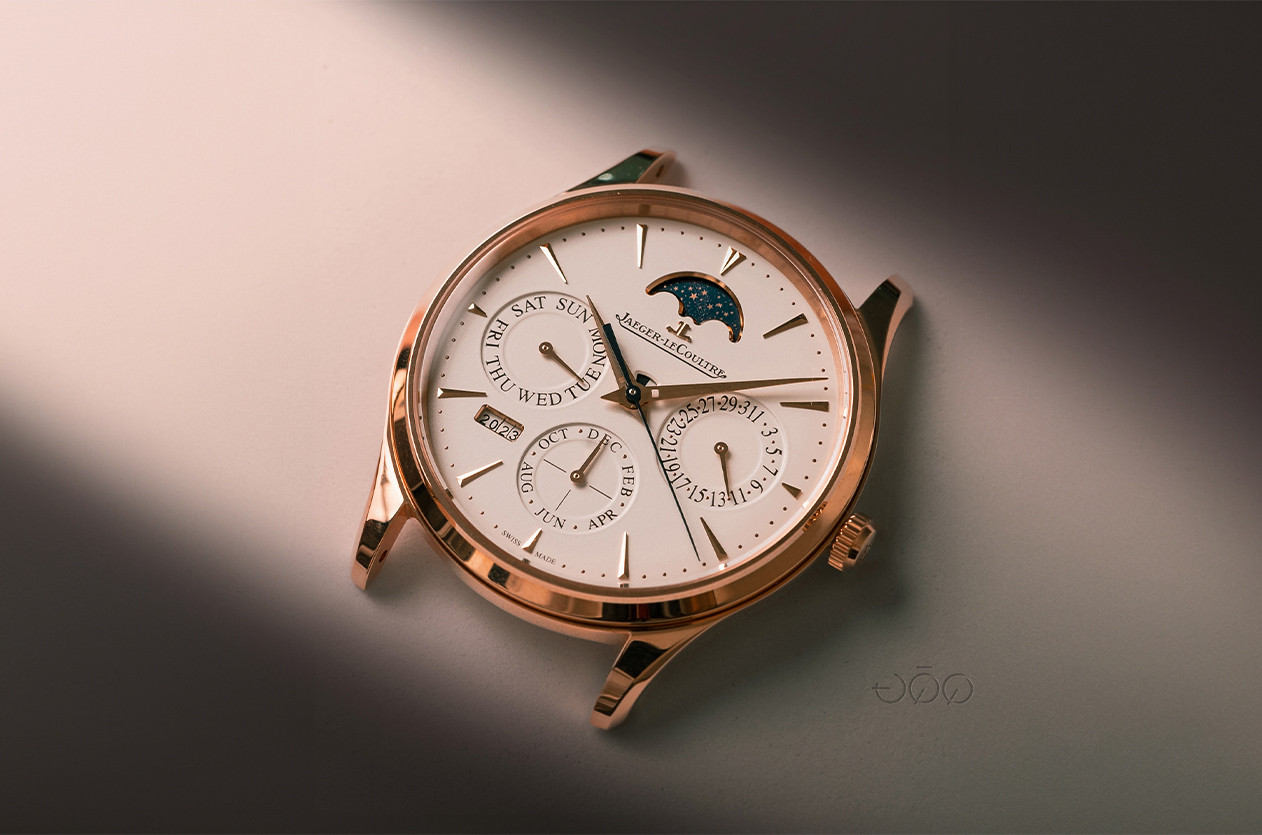
Editorial The Most Sought After Dial Finishing
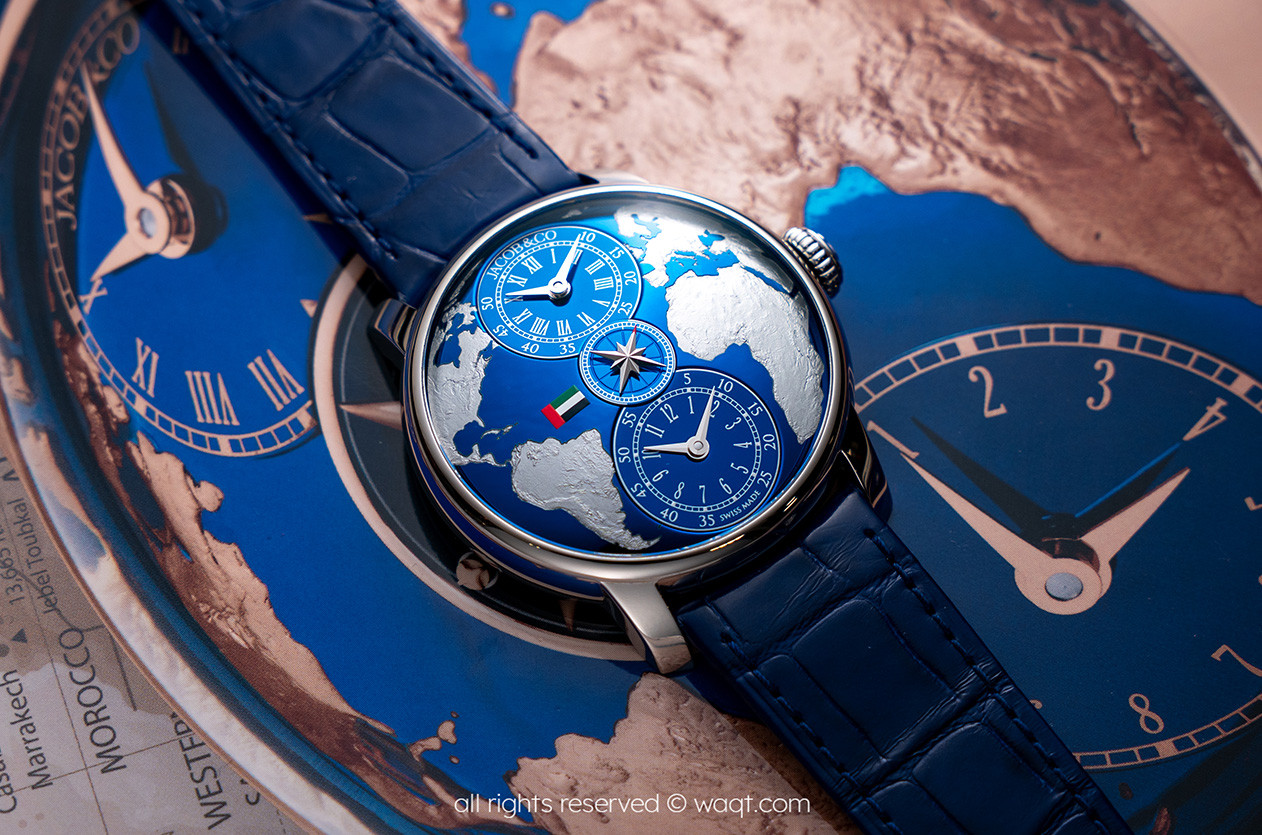
First Look A Special UAE Edition of “The World Is Yours Dual Time Zone”

Editorial The Secrets of Watch Case Design

Editorial The Titanium Watch Revolution

Introducing The Voutilainen CSW or Cushion Shape Worldtime: A Sculpture in Time

Editorial Is Carbon Fiber the Key to Richard Mille and Horacio Pagani’s Success?
Comment Delete Text
This page is available in English only. Please click below to visit Arabic Home page!