Introducing Breguet Refreshes the Tradition Collection with a Modern Touch
Welcome to the hub of the horoloy
The veteran French watchmakers returns with a one-hertz watch shaped by decades of experimentation
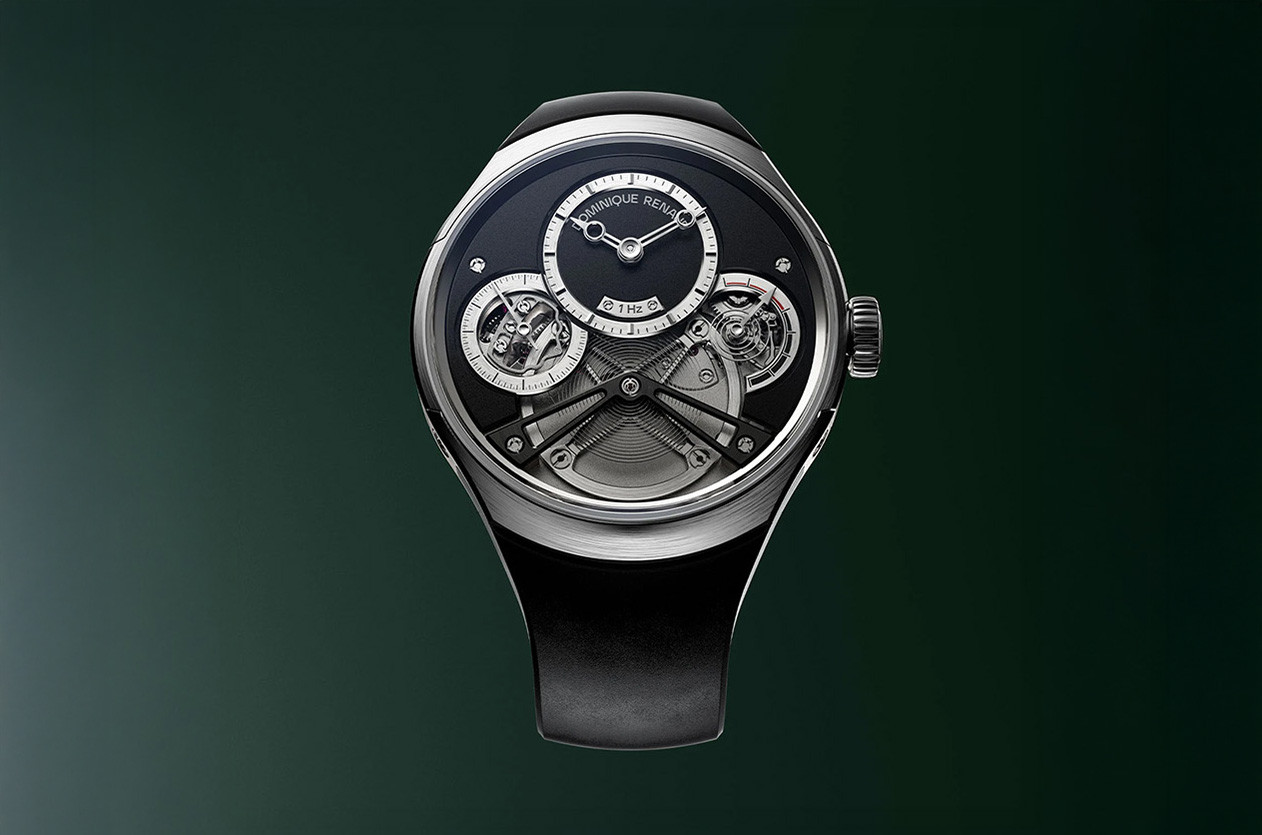
Long before launching a watch under his own name, French watchmaker Dominique Renaud had already secured his place in the modern history of haute horlogerie as one of the great minds of his generation. His career began in the complications workshops of Audemars Piguet in Le Brassus, where he met Giulio Papi. In 1986, the two founded Renaud & Papi, a specialist workshop that would go on to become one of the most important engines of technical innovation in Swiss watchmaking. Audemars Piguet acquired a controlling interest in the company in 1992 and later increased its stake to 78 percent.

That history matters, because Dominique Renaud has never been defined only by complexity in the conventional sense. Even at the height of his reputation, what set him apart was a more searching instinct, a sense that the movement was never truly finished as an idea. That spirit now takes form through HHDR in the Swiss town of Tolochenaz, a structure conceived as a place for research, experimentation, and cross-disciplinary development. The Dominique Renaud name, unveiled as the second expression of HHDR after Renaud Tixier, arrives with the weight of legacy behind it.

That is precisely what makes the Pulse60 such an intelligent debut. Many watchmakers with Renaud’s stature might have chosen to open with a grand complication or some overt demonstration of technical power. Instead, he begins by challenging one of mechanical watchmaking’s most deeply embedded assumptions. For years, much of the industry has treated higher frequency as shorthand for better chronometric performance, and Renaud himself had already explored that territory through high-frequency, low-amplitude research, including work on a 12 Hz balance oscillating through just 30 degrees. The Pulse60 turns away from that direction entirely. Rather than pushing further toward speed, it asks what happens when the regulating organ slows to a 1 Hz rhythm.

The case measures 40 mm in diameter and 12 mm in thickness, including the sapphire crystal. It is offered either in Grade 5 titanium or in a bi-material combination of Grade 5 titanium and pink gold. The domed crystal, the disappearance of a conventional bezel, and the absence of traditional lugs all work together to create a smooth transition into the integrated strap. The top of the case is circular satin-brushed, while the flanks are polished. The reverse is fitted with a flat sapphire crystal caseback with anti-reflective treatment. It reveals the movement through a deliberately streamlined composition built from simple geometric forms, while water resistance is rated at 30 meters.

The dial is dominated by the regulating organ, and rightly so. In the titanium versions, the watch is offered with black or grey dials built on an opaline base with diamond-cut openings. The black model features a black bridge with rhodium-plated hands, while the grey version pairs a blue bridge with blued hands. The bi-material pink gold and titanium model takes a different route, with a guilloché dial, a pink gold bridge, and blued hands. Hours and minutes are displayed on a subdial at 12 o’clock, while the counter at 9 o’clock shows the seconds in the form of a natural dead half-second, a visual consequence of the one-hertz beat rate and the balance’s single to-and-fro motion per second. At 3 o’clock sits a torque indicator that reads the remaining energy directly from the barrel.

Powering the watch is the calibre DM BUA2024, a manually wound movement whose name stands for Balancier Ultra Amplitude. That description is central to the watch’s purpose. The movement beats at 1 Hz, or 7,200 vph, and uses a balance measuring 20 mm in diameter, an unusually large oscillator clearly intended to draw on the stabilizing benefits of inertia. Power reserve is rated at four days.

The watch is paired with an interchangeable rubber strap using a push-button system and is delivered with both a pin buckle and a triple-folding clasp. The Pulse60 launches as a new collection in three versions, with availability beginning in April 2026 through authorized retailers.
Price is set at CHF 49,000, approximately AED 229,000, for the titanium versions, and CHF 59,000, approximately AED 275,000, for the pink gold and titanium model.
For more information, visit Dominique Renaud’s official website.
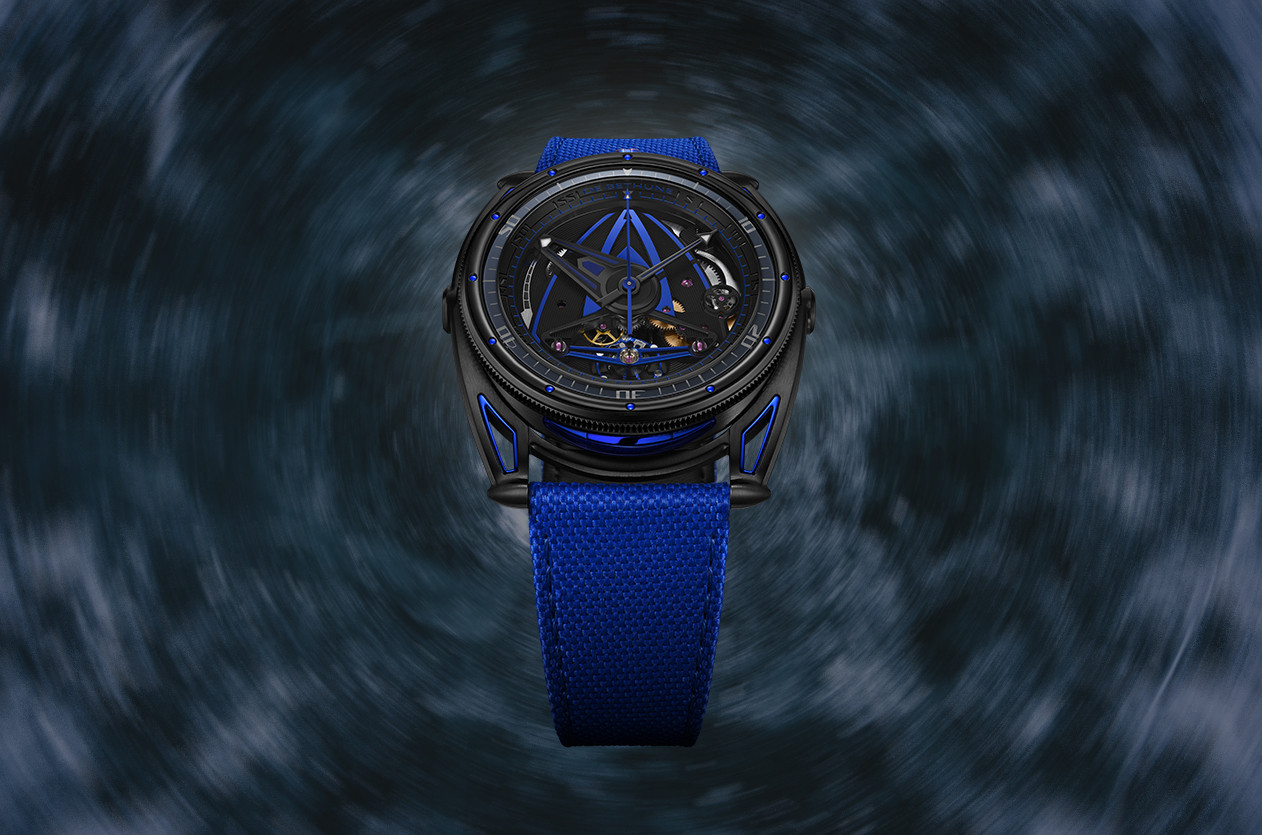
Introducing DB28GS Swordfish: The Luxury Dive Watch from De Bethune
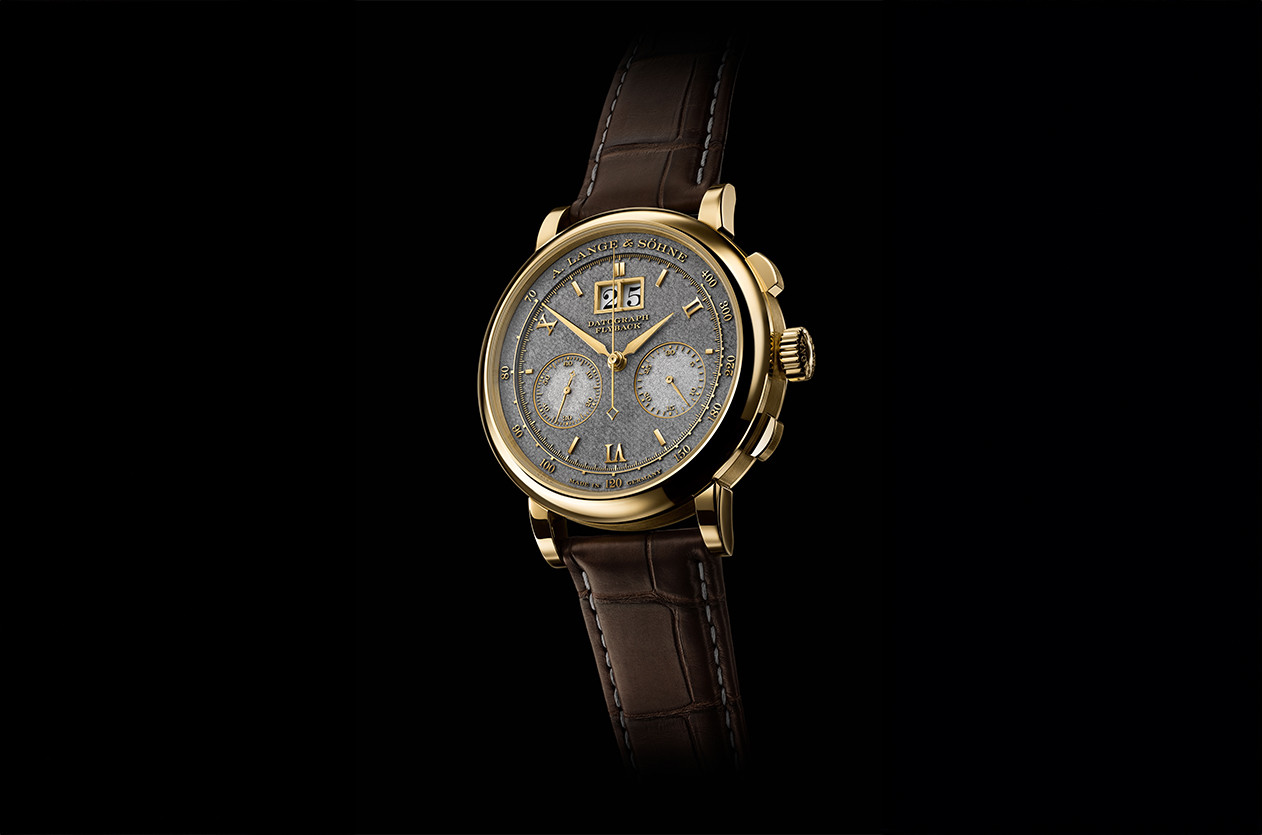
Introducing A. Lange & Söhne Continues Celebrating the 25th Anniversary of the Datograph
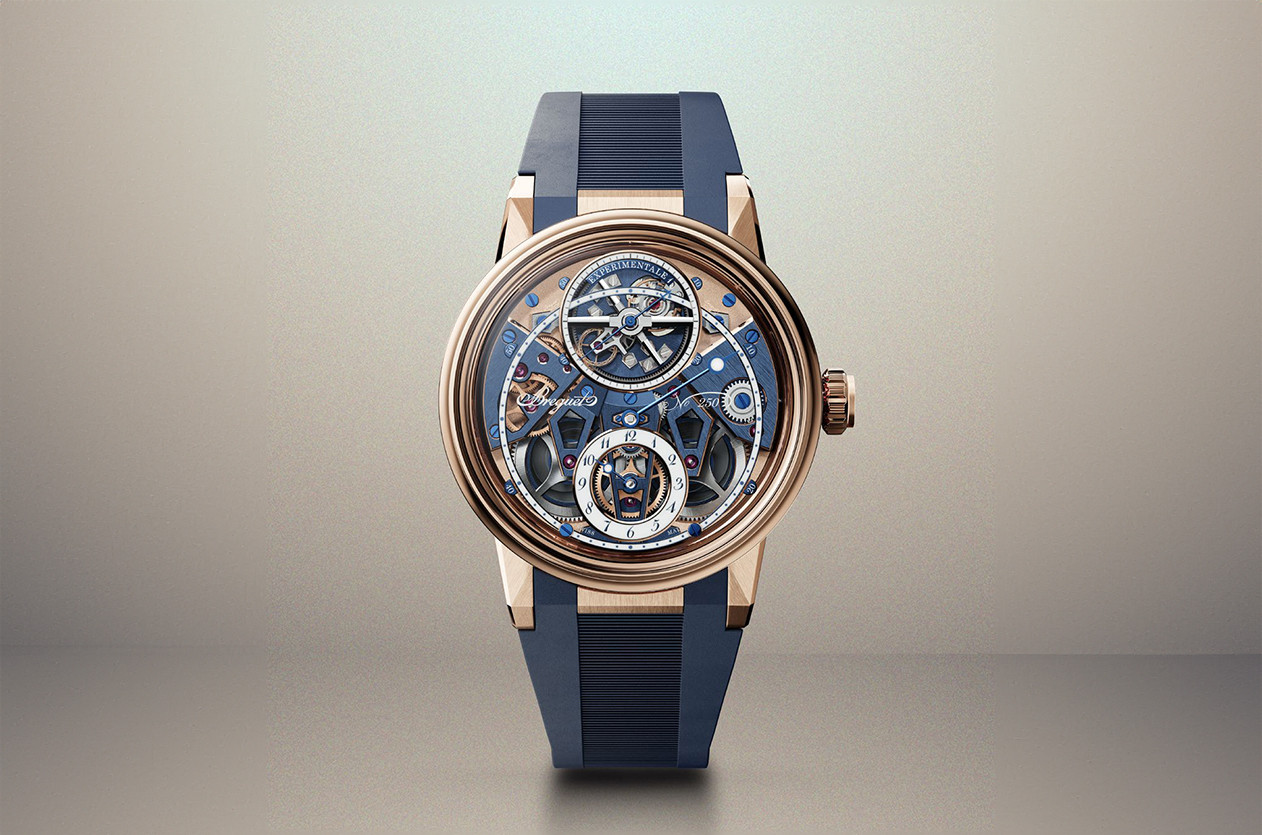
Introducing Breguet Unveils Its Final 250th-Anniversary Timepiece: Expérimentale 1
Introducing Simon Brette Unveils the Chronomètre Artisans in Stainless Steel
Hands on The New Vacheron Constantin Patrimony Collection
Introducing Moritz Grossmann Presents the TEFNUT Seddiqi 75 Anniversary Edition
Editorial The Most Sought After Dial Finishing

First Look A Special UAE Edition of “The World Is Yours Dual Time Zone”
Editorial The Secrets of Watch Case Design

Editorial The Titanium Watch Revolution
Introducing The Voutilainen CSW or Cushion Shape Worldtime: A Sculpture in Time

Editorial Is Carbon Fiber the Key to Richard Mille and Horacio Pagani’s Success?
Comment Delete Text
This page is available in English only. Please click below to visit Arabic Home page!